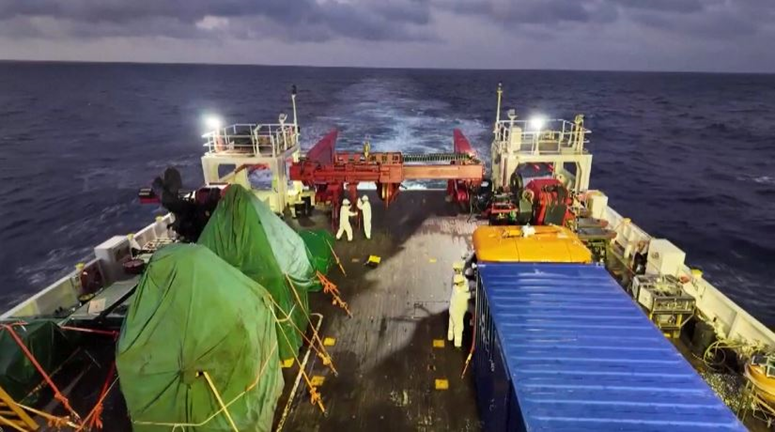
ফেব্রুয়ারি ১৮, সিএমজি বাংলা ডেস্ক: বসন্ত উৎসবের ছুটির মধ্যেও চীন তাদের সামুদ্রিক গবেষণা কার্যক্রম অব্যাহত রেখেছে। চীনের চারটি মহাসাগরীয় অভিযান দল এখন প্রশান্ত মহাসাগর ও ভারত মহাসাগর অঞ্চলে বিভিন্ন মিশন পরিচালনা করছে।
চীনের মনুষ্যবাহী ডুবোজাহাজ চিয়াওলং গভীর সমুদ্র গবেষণা জাহাজ ডিপ সি নং-১-এ অবস্থান করে পশ্চিম প্রশান্ত মহাসাগরে তার ৪১৯তম ডুব সম্পন্ন করেছে। চার হাজার মিটারেরও বেশি গভীরে এই অভিযান পরিচালিত হয় এবং একটি দূরনিয়ন্ত্রিত মনুষ্যবিহীন ডুবযানের সঙ্গে সমন্বিতভাবে কাজ করা হয়। এতে সামুদ্রিক ভূতত্ত্ব, রসায়ন, জীববিজ্ঞান ও পদার্থবিদ্যাসহ বিভিন্ন শাখায় গুরুত্বপূর্ণ তথ্য সংগ্রহ করা সম্ভব হয়েছে।
অন্যদিকে, উত্তর-পশ্চিম ভারত মহাসাগরে তায়াং-৯৪ দল জলবায়ু ও মানবসৃষ্ট পরিবর্তন, এবং সামুদ্রিক জীববৈচিত্র্যের অভিযোজন প্রক্রিয়া নিয়ে গবেষণা চালাচ্ছে।
দলটি চীনের তৈরি অত্যাধুনিক সমুদ্র সরঞ্জাম মোতায়েন করবে বলেও জানা গেছে। এসব প্রযুক্তির মাধ্যমে হাইড্রোথার্মাল ভেন্ট ভূতাত্ত্বিক গঠন, এবং আশপাশের সামুদ্রিক পরিবেশের রিয়েল-টাইম, ত্রিমাত্রিক ও উচ্চ-রেজোলিউশন মূল্যায়ন সম্ভব হবে বলে জানিয়েছেন সংশ্লিষ্ট গবেষকেরা।
জেনিফার/ফয়সল
তথ্য ও ছবি: সিসিটিভি
China's expedition teams advancing research missions in Pacific, Indian Oceans
Four Chinese global ocean expedition teams are advancing their ongoing scientific research missions in the Pacific and Indian Oceans as China is on Spring Festival holiday nationwide. .
China's manned submersible Jiaolong, which is on board the Deep Sea No. 1 research vessel, on Monday completed its 419th dive in the Western Pacific Ocean, plunging over 4,000 meters deep under water, in coordination with an unmanned remotely controlled submersible.
It marked Jiaolong's eighth deep-sea dive since Deep Sea No. 1 set sail to conduct ecological investigations of the hydrothermal areas as well as research in marine geology, chemistry, biology, and physics in the western edge of the Pacific.
Monday's dive also signified that the Chinese research vessel is now capable of conducting regular manned-unmanned submersible operations.
In the northwest Pacific Ocean, China's Dayang-91 ocean expedition team is making progress in researching marine resources and the environment, providing support for environmental impact assessment work during future mining equipment tests.
Meanwhile, in the northwest Indian Ocean, the Dayang-94 ocean expedition team is also making headway in researching how human activities and climate change are driving marine environmental shifts and hypoxia, and their impact on the evolution and adaptation of marine biodiversity.
Another Chinese ocean expedition team, the Dayang-95, is heading to the southwest Indian Ocean, home to the world's first international seafloor sulfide exploration area designated by the International Seabed Authority.
To meet the country's needs for resource and environmental assessments of its exploration area, the research team will deploy multiple sets of independently developed, cutting-edge deep-sea equipment. These tools will be used to conduct comprehensive geological and ecological surveys of hydrothermal vent zones, enabling real-time, three-dimensional, and high-resolution evaluations of both the resource potential and the surrounding marine environment in the target area.
প্রশান্ত ও ভারত মহাসাগরে চীনের বৈজ্ঞানিক অভিযাত্রা জোরদার
Connect With Us:
Advertisement

Our Editorial Standards
We are committed to providing accurate, well-researched, and trustworthy content.
Fact-Checked
This article has been thoroughly fact-checked by our editorial team.
Expert Review
Reviewed by subject matter experts for accuracy and completeness.
Regularly Updated
We regularly update our content to ensure it remains current.
Unbiased Coverage
We strive to present balanced information.